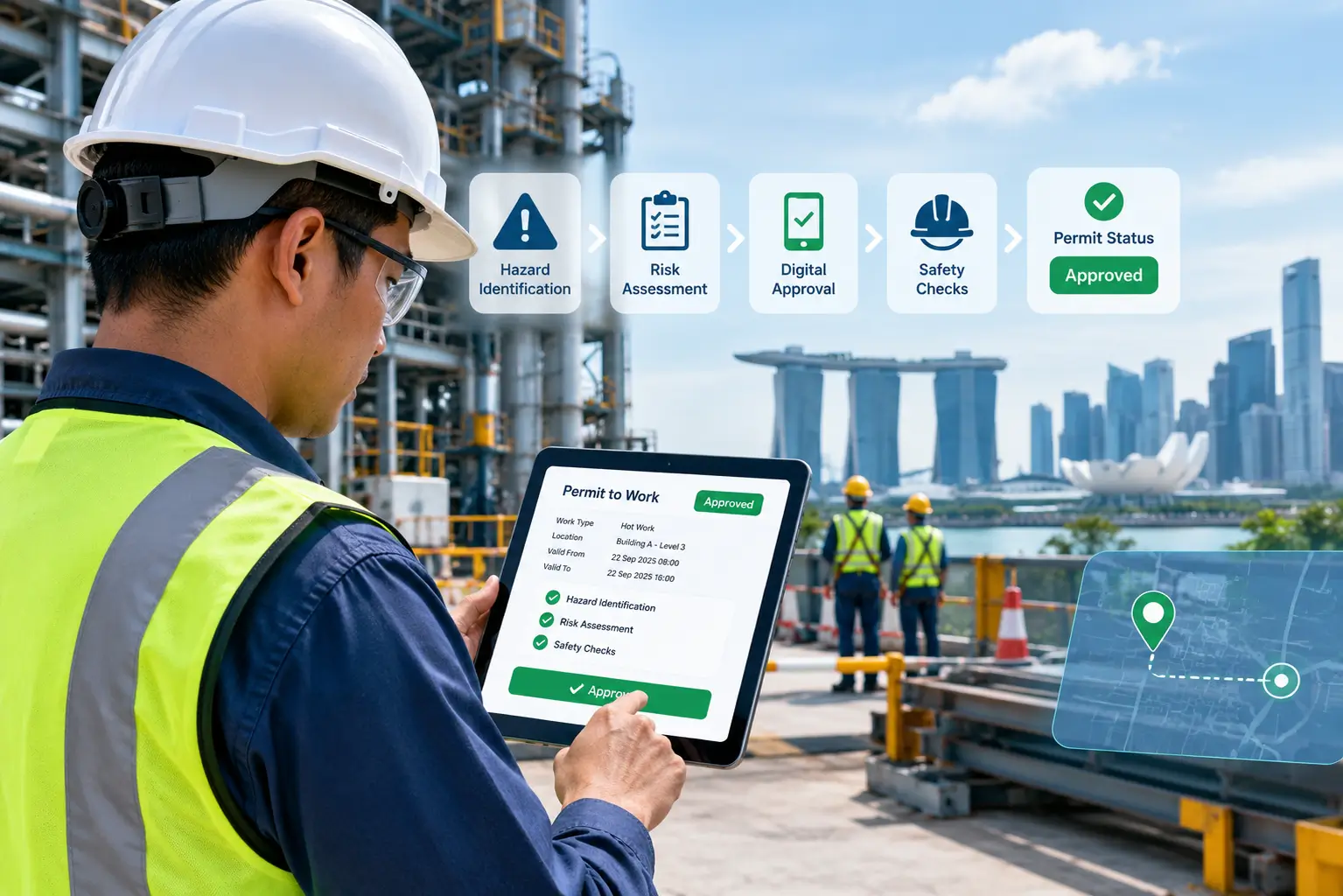

If your business handles hot work, confined space entry, working at height, or other higher-risk activities, you’re probably already familiar with permit to work processes. What’s changed in recent years is how that process gets managed — a growing number of Singapore businesses are moving from paper-based permits to digital ePTW software, partly for efficiency, and partly because regulators and project owners increasingly expect it.
This guide explains what a Permit to Work system is, why it matters, how digital ePTW software improves on manual processes, and what to look for when evaluating a system for your organisation.
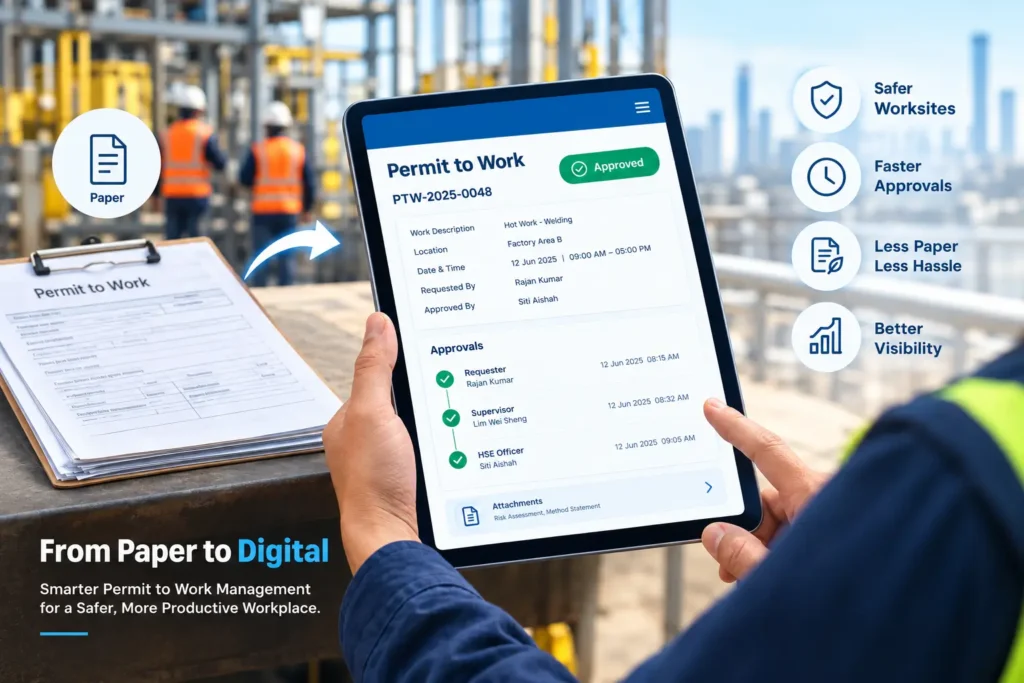
A Permit to Work (ePTW) system is a formal, controlled process for authorising certain work activities — typically ones that carry specific hazards or risks, such as hot work, confined space entry, work at height, electrical work, or lifting operations. Before work begins, a ePTW confirms that the necessary hazards have been identified, the right precautions are in place, and the work has been reviewed and authorised by a competent person.
In practice, a permit sets out details like the scope of work, the location, the people involved, the hazards identified, the control measures required, and the timeframe within which the work is authorised to proceed. It’s a communication and control tool — not a substitute for the underlying risk assessment, safe work procedures, or trained, competent personnel that must already be in place.
Businesses use ePTW systems because certain work activities need more than a verbal go-ahead. A structured permit process supports:
It’s worth being clear about what a ePTW system is not. It doesn’t replace proper risk assessments, safe work procedures, or the need for trained and competent personnel to carry out the work. A permit is only as good as the risk assessment and controls behind it — the process formalises and documents decisions that should already be grounded in sound safety practice.
Digital ePTW software (sometimes called ePTW, or electronic permit to work) replaces the paper permit book or standalone forms with a digital application that manages the same process — application, review, approval, monitoring, and closure — through a centralised system rather than physical paperwork.
Instead of a worker filling out a paper form and physically walking it to a supervisor for a signature, the permit is created, submitted, reviewed, and approved digitally, often from a desktop or mobile device. The underlying safety requirements don’t change; what changes is how the process is captured, tracked, and stored.
Paper-based ePTW processes remain valid and are still used by many organisations, particularly smaller sites with a low volume of permits. But as the number of concurrent permits, contractors, or work locations grows, manual processes tend to run into recurring problems:
None of these problems mean paper ePTW is inherently unsafe when properly managed. But they do represent operational friction and risk points that tend to compound as an organisation scales.
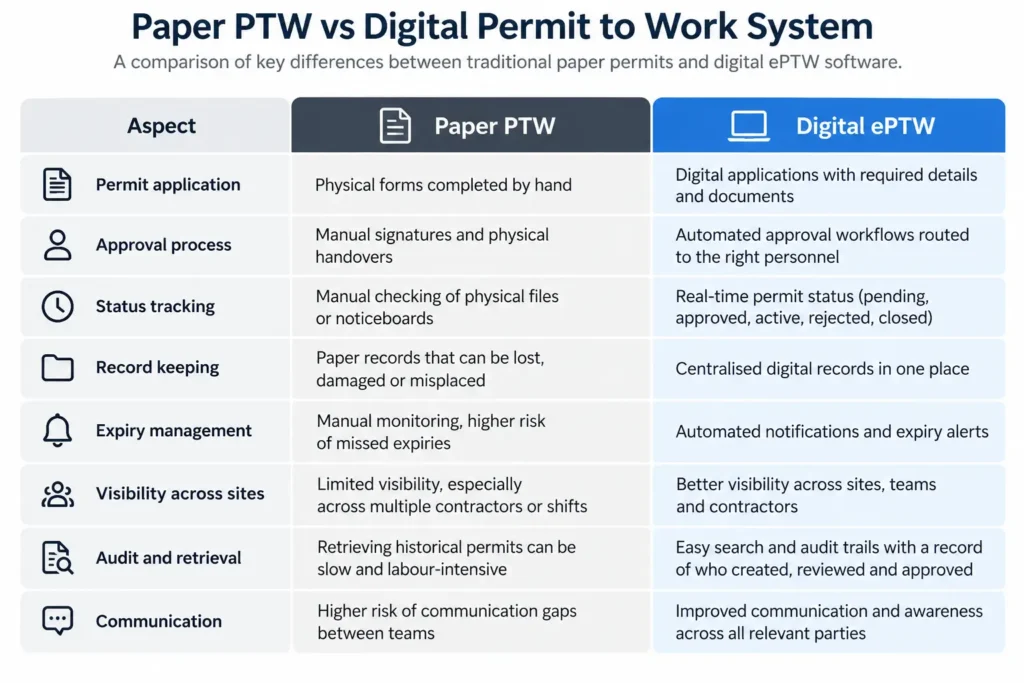
Digital ePTW software addresses many of the friction points above by moving the process into a structured, centralised platform:
These improvements streamline administration and strengthen documentation — but the quality of the underlying risk assessment, the competency of the people issuing and approving permits, and the discipline of following through on required controls remain just as important as they were with paper. Software supports the process; it doesn’t run the safety judgement behind it.
When evaluating ePTW software, the exact feature set will vary by vendor, but organisations typically look for capabilities such as:
Adaptive BizApp’s own ePTW – Digital Permit to Work module, for example, supports digital permit applications, configurable approval workflows, real-time permit monitoring across pending, approved, active, rejected, and closed statuses, worker credential and equipment certification checks, and centralised digital permit records accessible from desktop and mobile. Beyond this, we won’t make claims about specific features without pointing you to verify them directly on the product page or in a demo, since capabilities can be configured or updated over time.
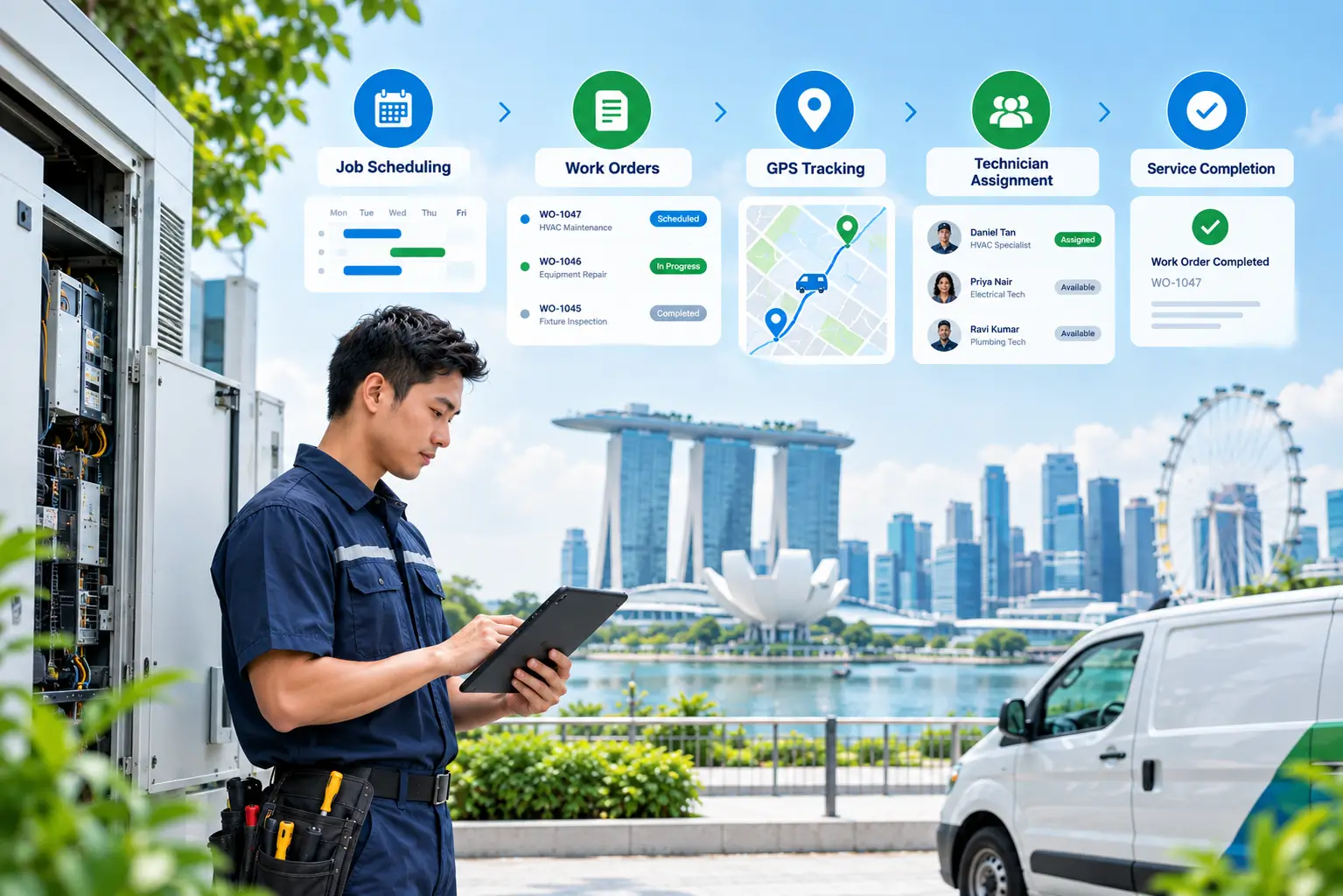
Permit management doesn’t sit in isolation — for many organisations, it connects to wider operational workflows. A maintenance job that requires a hot work permit, for instance, might also involve scheduling a technician, tracking parts or equipment from inventory, and updating a service record once the work is complete. A construction project managing multiple concurrent permits also needs visibility into contractor assignments, site schedules, and project timelines.
Where permit management is part of a broader ERP platform — alongside modules like service management,project management, or inventory and warehouse management — organisations can get a more connected view of how high-risk work activities relate to scheduling, resourcing, and asset use, rather than treating permits as a standalone paperwork exercise.
For Singapore SMEs and larger operators alike, moving to digital ePTW typically delivers benefits in these areas:
It’s important to be realistic about what software can and can’t do here: digital ePTW improves how the permit process is managed and documented, but it doesn’t replace the need for proper risk assessments, trained personnel, and a genuine safety culture on site. No software guarantees workplace safety on its own — it’s a tool that supports a safety management system, not a substitute for one.
Permit to Work systems exist to formalise how higher-risk work activities are authorised, communicated, and documented. Whether managed on paper or digitally, the underlying safety fundamentals — proper risk assessment, trained personnel, and genuine safety controls — remain the foundation. What digital ePTW software adds is better workflow control, real-time visibility, faster administration, and centralised records that are easier to retrieve and audit.
For Singapore businesses managing higher-risk work across multiple sites, contractors, or teams, moving from paper to digital ePTW is often less about ticking a compliance box and more about reducing administrative friction and improving day-to-day visibility. If you’re exploring how digital permit management could fit into your operations, Adaptive BizApp’s ePTW module is built specifically for Singapore workplaces, and can work alongside our broader ERP platform covering service management, project management, and inventory. Book a free demo to see how it fits your workflow.
Manage finance,HRMS, inventory, sales & operations in one powerful platform to improve efficiency and accelerate business growth.
Built to support modern businesses with smart, scalable solutions. We simplify daily operations and enable teams to work faster, smarter, and more efficiently.
© 2026 Adaptive Cloud Systems Pte. Ltd. All Rights Reserved.