
Walk into a warehouse that’s still running on paper logs and spreadsheets, and you can usually tell within five minutes — someone’s double-checking a count that should already be accurate, or hunting for stock that the system says exists but nobody can actually find. A warehouse management system is what fixes that. For Singapore businesses dealing with growing order volumes, it’s stopped being a nice-to-have and turned into something closer to table stakes.
Whether it’s one storage site or several spread across the island, a warehouse management system gives Singapore businesses accurate stock visibility, faster picking and packing, and a lot fewer of the costly mistakes that come from tracking things by hand. Here’s what a warehouse management system actually does, the benefits worth knowing about, and what to check before choosing one (for a bit of local context, Singapore Logistics Association and Enterprise Singapore both cover supply chain standards worth reading if you’re new to this).
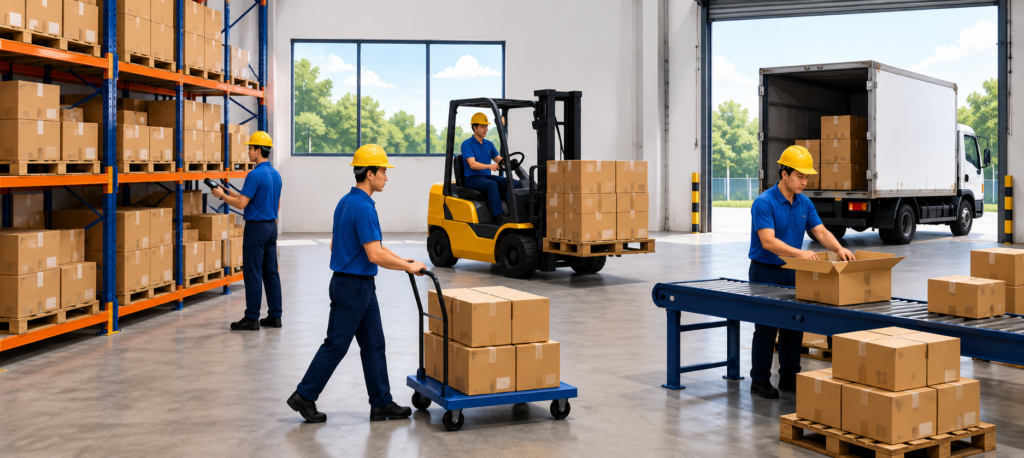
Not every business needs the same level of sophistication here. A retailer with a single storeroom might get by with basic stock tracking. But a wholesaler or manufacturer juggling multiple warehouses, high SKU counts, or constant stock transfers is going to see a lot more value from a full warehouse management system with barcode scanning and multi-location visibility built in. E-commerce businesses tend to feel the difference fastest, honestly, since order volumes and delivery expectations make manual tracking fall apart pretty quickly past a certain size.
Before signing up for anything, it’s worth checking whether the system supports barcode or RFID scanning, whether it handles multiple sites from one dashboard, and whether it actually connects to the accounting, sales, and procurement tools you’re already using. Reporting matters too — turnover and warehouse performance data should be detailed enough to be genuinely useful, not just a summary chart. And local support counts for more than people expect; being able to reach someone in Singapore during implementation makes a real difference.
A warehouse management system that plugs into the rest of the business tends to deliver a lot more value than one that just sits there tracking stock in isolation, which is why a lot of Singapore businesses now think about it as part of a bigger inventory management software or Cloud ERP decision rather than a separate purchase.
Manage finance,HRMS, inventory, sales & operations in one powerful platform to improve efficiency and accelerate business growth.
Built to support modern businesses with smart, scalable solutions. We simplify daily operations and enable teams to work faster, smarter, and more efficiently.
© 2026 Adaptive Cloud Systems Pte. Ltd. All Rights Reserved.